29
Jul 10

Antennagate: a love story

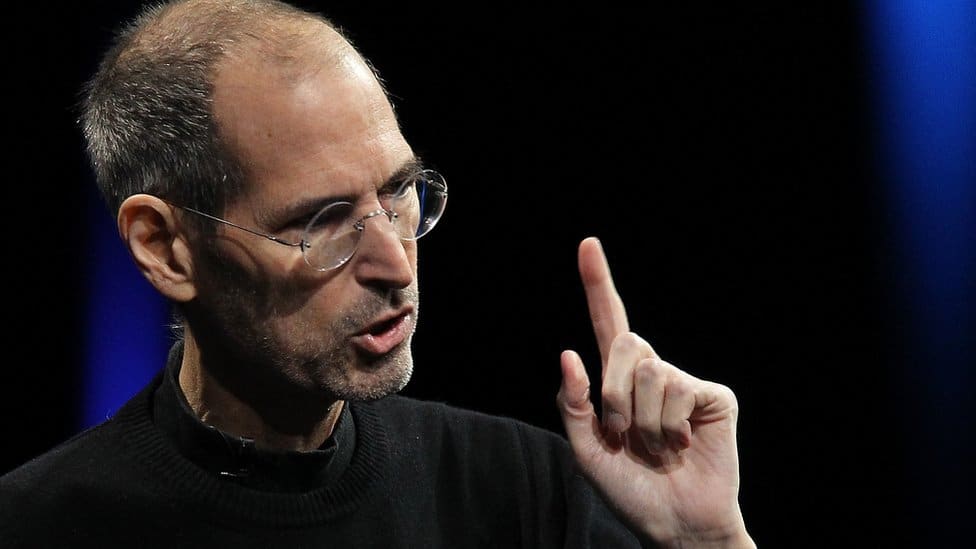
The most amazing thing about a Steve Jobs presentation is not what he does on stage. It’s what happens in the mainstream press immediately after. More times than not, they echo and amplify the message Steve has so carefully crafted.

Few companies can pull off such a feat so consistently. That’s because it ain’t easy. Apple puts a ton of work into creating a simple, powerful message for every event. That message then appears in Steve’s speech, on apple.com, in the press release — it’s hard to miss.

Steve’s favorite technique for driving a point home on stage? Brute force. He makes his point. And then he keeps making his point. Until no reasonable person could conceivably miss his point.

The Antennagate Press Conference wasn’t like a product launch event. It was a special circumstance. For this one, Steve pounded away at two messages. One was “smartphones aren’t perfect.” The other was … well, see if you can figure it out from this video.

Bookmark and Share

26
Jul 10

The dark side of the dark side

While many Mac users already see PCs as “the dark side,” Dell has somehow managed to up the ante on darkness.

According to the S.E.C., the company has been dabbling in a little nastiness called disclosure accounting fraud — and they’ve  just coughed up over $100 million in penalties to make it go away.

In a nutshell, Dell lied. They told the world they were meeting their quarterly goals because of their legendary strengths, when in fact it was because of their legendary weakness: an addiction to Intel’s rebate money. Dell received money for using Intel chips, as well as not using A.M.D. chips. Messy.

The S.E.C. said Dell acted “to project financial results that the company wished it had achieved but could not.” They met Wall Street’s expectations “by breaking the rules.”

Okay, so companies get themselves in legal hot water every day. But Dell managed to do something special. The S.E.C. not only fined Dell the company, they took the rare step of fining Dell the person — along with a handful of his former executives. Seems they created their own little Cosa Vostro.

Documents released by the S.E.C. show just how murky this operation was. Former chief executive Kevin Rollins boasted in 2004 that Dell can meet Wall Street expectations because of its “tightly controlled supply chain, highly efficient infrastructure and direct relationships with customers.” Somehow he confused that with “We’re getting a new shipment of cash from Intel.”

He fessed up in an email to Michael Dell, saying that Intel’s money was the only reason they’d made their numbers for three consecutive quarters. It’s “a bad way to run the railroad,” he said, adding “we are going to have to get off their drug…”

Rollins’ behavior was 100% despicable, but his assessment was 100% correct. They do have to get off this drug. All PC makers have to get off this drug — but they can’t. They became addicted ages ago, when PCs became commodities. Since they can’t make a profit on their products, they hungrily take payments from Intel, Microsoft and the software makers who bloat new PCs with dandy demos. According to The New York Times, some of the emails released by the S.E.C. showed Dell begging Intel for money to make their quarterly results.

All of this, of course, is in stark contrast to Apple — to whom Intel is an ingredient, not a paymaster.

Honestly, I don’t get why Michael Dell still runs his company. CEOs are routinely banished for failing to meet goals, and Michael hasn’t come close to restoring the company in the three years he’s been back. As CEO, he should be dumped even if he had nothing to do with the current mess — and in this case it’s obvious he had everything to do with this mess. Where are the angry villagers with their pitchforks and torches?

(Read The New York Times story here.)

Bookmark and Share

22
Jul 10

The ever-arrogant Apple

Following the Antennagate news conference, certain critics quickly concluded that Apple was acting like its usual arrogant self.

I couldn’t agree more.

How dare Apple think they can make this problem go away with a free case that makes the problem go away. They need to suffer more than that.

This company was practically founded on arrogance. Imagine, two guys in a garage thinking they could out-compute companies like IBM and HP. In later years, they’d tell us to abandon the standard PC interface and use some silly mouse to control our computers. With smug superiority, they’d cut out the floppy disk we’d come to love. Errgh.

If only we thought to stop them then.

Because it wasn’t long after that Apple — a company without any real consumer electronics experience — had the gall to build the music player that Sony or some better-qualified company should have built. This self-appointed savior of the music business somehow seduced the record companies with an online music store that forces us all to go along with “their vision” of how music should be sold.

With iPhone, Apple took its arrogance to an extreme. They marched right into a market owned by big, successful global companies like Motorola and Nokia, believing they could “school them” by reimagining the smartphone. How self-important can a company get?

Then came iPad, where Apple’s arrogantly arrogant take on arrogance was laid bare for all to see. This is pure Apple, telling us they can do what Microsoft and others had failed to do for a decade before. Overnight, they create a new category and expect us to follow their vision for the future of computing? And suck us into making even more purchases at the iTunes Store?

It’s gotten to the point where Apple doesn’t even try to disguise their arrogance. They’re a company that creates devices other companies should have created, follows standards only when it pleases them, shuns research to create only the products they’d like to use themselves  — and then won’t even let outsiders tamper with the platforms they’ve created!

Look what they’ve done to poor Adobe, yanking away their right to spend more than three years figuring out how to run Flash on mobile devices. Look what they’ve done to the world’s developers, telling them to write specifically for iPhone rather than just port over apps designed for less capable phones. Compounding their sin, they have the unrelenting gall to insist that apps meet some basic standards for quality and reliability. With their “our way or the highway” attitude, Apple takes choice away from customers, forcing them to settle for a library of only 225,000 apps.

In my mind, Apple is just another in a long list of companies who make the mistake of following their own vision — like Porsche or Nike. Whatever happened to just fitting in?

Obviously, Apple’s excessive arrogance will be their downfall. Never mind that their market share has been so rapidly increasing for so long in so many categories. Or that Apple’s business model produces vastly more profit than those of other technology companies. Chalk that up to good fortune.

One day all the sheep under Steve Jobs’ spell will wake up and demand that Apple act more like other technology companies. Then at last iPhones can be more like Droids, Macs can be more like PCs and Apple can enjoy the PC makers’ perennial sense of economic doom. Apple shareholders will finally be able to rejoice in an investment that avoids such dizzying heights.

That’s the way it oughta be.

Bookmark and Share

19
Jul 10

Antennagate: the finale?

I wouldn’t exactly put Apple’s Friday press conference on par with cold fusion, but it was something I never really thought I’d see in my lifetime. Who would have imagined Apple could ever get itself into the position where it had to call a press conference on two days’ notice?

So now we’ve had some time to absorb the event. Here are some Monday-morning reactions — hopefully not duplicating what’s been said already:

The feisty factor. At the time, I was a bit surprised at Steve’s demeanor. But I liked it. I’m sure many Apple detractors wished to see Apple’s tail between its legs, and that didn’t happen. Apple’s goal was to explain the situation, not apologize for it, and then set things right. Though Apple was by definition on the defensive, Steve was just being honest that this thing has been “blown out of proportion.” I have to agree — though it’s not like Apple is without blame.

The quick fix. Bumpers make everything okay. Kinda. As stated before, I’ve never had a problem without the bumper, and neither have the vast majority. But the bumper does solve the issue for those who have an issue. The only downside is the perception that it’s necessary for normal functionality. This is what’s out there in the world, and that’s a problem.

The permanent fix. I was surprised that there was none. As the press conference played out, I thought it was all going logically: first the background, then the temporary fix, then the permanent fix. That final step never came. This guarantees that the issue is not fully defused. But wait…

A new theory. There are only two possible reasons why Apple didn’t announce a permanent fix. One is that a fix is not feasible, given the current iPhone 4 design. The other is that Apple simply hasn’t had the time to engineer and test the best possible solution. I buy the latter. This could well be why free bumpers will only be given out until September 30th. By that time, the new iPhones may be modified with something as simple as an antenna coating. If it goes that way, the fix can be announced as an improvement along the way, rather than an emergency response to a crisis situation.

Feel the love. Steve’s badly-kept secret to effective communications is his ability to stick to a theme. He gets the theme out early and repeats it often. The theme for this event was “we love our customers.” By my count, he used the L-word 12 times. It might have seemed too sugary to some, but love being such an emotional word, it allowed Apple to put hard facts in a softer framework.

The new web page. Apple’s new Antenna page is an interesting development too. Gives everyone a chance to see that Apple’s competitors face the same issue. In this case, Apple seems to be of the belief that the best offense is a good defense. Maybe so.

The competitors. Marketing can be a chess game. Steve’s made his move, now his competitors get to make theirs. “Them’s fighting words” for these guys, and they’ve already had some nasty things to say about Apple drawing them into its “self-made debacle.” Careful with this one, boys. You may protesteth too much. More and more stories are beginning to appear confirming that this really is an industry-wide problem, and other phones do suffer from a similar death grip.

The missing fix. Steve pretty much deflected any mention of the iPhone proximity sensor problem (causing some calls to be ended when cheek touches screen) with a quick “we’re working on it.” Honestly, this seems like a more serious problem in everyday use than the antenna. I’m surprised more critics haven’t jumped on this one, and that Apple hasn’t fixed it more quickly.

Idiot alert. Every so often, someone says something so colossally stupid, it merits a mention here. Jeff Bertolucci of PC World wins the honor for his post-press conference article. In a nutshell, he says iPhone 4 is so tainted now, Apple must kill it immediately and remove every trace of it from their stores. I won’t dignify stupidity with a link (seek it out if you must), but it’s scary that articles like this exist. If natural selection hasn’t filtered out people like this by now, I fear we’re all doomed.

Bookmark and Share

16
Jul 10

Droid does coolness

Okay, so I’m a day late with this one. Just wanted to drool a bit over the Droid X teaser commercial that ran the night before yesterday’s launch.

I have to admit, this spot hooked me.

I’ve knocked Droid ads in the past for being 99% testosterone with little appeal to the female audience. I wouldn’t make the same criticism of this spot — it’s beautifully produced and, lo and behold, it actually has a story. The soundtrack is perfect. Mercifully absent are the cheesy effects and robot-macho trash talk.

Consistent with Droid’s we’re-not-Apple approach, no spot could be as far removed from Apple’s touchy-feely FaceTime spots as this. While Apple touts babies and relationships, Droid is on a cold, hard quest to uncover new technologies. I’m not saying Apple will suffer for it, only that the two worlds are night and day — just the way Droid likes it.

Bear in mind, this spot is just a teaser. Who knows what the full campaign will look like, but we can safely assume it won’t feature grandma and her new kitten.

I haven’t yet gotten to play with a Droid X, but from what I see of it online, it will give iPhone a run for its money. The huge screen looks amazing, though I’m curious to find out what that means for battery life. The fact that it’s available on Verizon puts even more pressure on Apple at a time when they’ve got their hands full with, uh, other issues.

In the meantime, I’m a sucker for a good story — and this spot does its job well. Kudos to whoever created it. Great work. (If anyone knows who the culprits are, I’d be happy to give them credit here.)

Bookmark and Share

15
Jul 10

The great mystery of Apple’s stumble

There are a few reasons I respect Apple as I do.

Corny as it sounds, the biggest one is that they believe in “doing the right thing.” In my experience, other companies believe they share this value, but frequently confuse the right thing with “the most cost-efficient thing” or “the least controversial thing.” Apple focuses on the customer experience and makes decisions accordingly — even when the cost is high.

That’s the Apple I know. It’s also the Apple that, for reasons unknown, has taken the last few weeks off.

The good news is, there is now a press conference set for Friday morning. We can safely assume Steve will explain what’s happened and tell us how Apple is going to set things straight. It’s important to note that this is being billed as a press conference, which is something I’ve never seen Apple do before. That means they’ll be taking questions from the assembled press, and those questions are sure to be pointed. This is brave, but also necessary. By their own action and inaction, Apple’s “got some splainin’ to do.”

I’m confident that sanity will be restored. The bigger question is, how did sanity slip away in the first place?

Personally, I cannot imagine that Apple — or any company — could possibly design antennae in such a radical way without being aware of what happens when a human hand bridges the gap.

My theory is that Apple did what they’ve always done so well in the past. They looked at the total product design and made the tradeoffs necessary to create the best possible iPhone. What they gained by this design — a 24% thinner phone that gives most users better reception — seemed like a good tradeoff.

In hindsight, of course, that seems terribly naive. Apple attracts way too much scrutiny for such things to go unnoticed. They created a lose-lose situation for themselves. It appeared that they either didn’t have a clue about antenna engineering or they tried to slip one past us. This wasn’t just an opening for the anti-Apple crowd — it was a disappointment for Apple customers used to the pursuit of perfection.

Anyone looking for evidence that Apple knew about the flaw from the start would point to Exhibit A: the bumper. A few designer cases aside, Apple hasn’t dabbled too much in cases before, yet bumpers were a part of iPhone 4 from the start. This could be perfectly innocent — it just looks suspicious given what’s happened.

So why didn’t Apple handle this better? Why would their response be an open letter (not written by Steve) that reeked of a company avoiding responsibility? For those experiencing dropped calls, the display of bars is hardly the issue. A software fix alone seemed laughably inadequate, and terribly un-Apple.

Why didn’t Apple do what they’ve done before? Steve personally responded to the original iPhone pricing fiasco by offering $100 gift cards to those who overpaid in the first three months. Why didn’t they offer iPhone 4 buyers something as substantial?

Personally, I believe lack of “substantial” has been the hold-up. That iPhone 4 open letter was their attempt to calm the torch-carrying masses at a time when they literally had nothing substantial to offer. The engineers hadn’t yet solved the design issue for future iPhones. Bumpers were back-ordered, so Apple couldn’t even reasonably suggest them as a fix. They may well have gotten themselves into a situation where there wasn’t a viable “right thing to do.”

But Steve has one power that few CEOs have. He can make things happen, even if they don’t seem possible. So I believe all the pieces are now in place for Apple to respond as we wished they would have responded earlier. I expect them to get back into to the right-thing business on Friday. It will be expensive, probably involving $50 gift cards or free bumpers to those who’ve already bought — and a no-questions return policy for those about to buy. Obviously it will also involve a plan to address the design flaw in manufacturing.

The great shame of this is that iPhone 4 is an amazing bit of technology. I have experienced no reception issues with mine. It’s one of those devices that makes me happier every day. Despite the feeding frenzy in the mainstream press and blogosphere, there is no iPhone 4 user revolt. People aren’t flooding the Apple Stores to get their money back. What we have is a huge number of happy customers being bombarded by stories telling them they shouldn’t be so happy. I’m not sure there’s any parallel in consumer product history.

I don’t mean to downplay this. The iPhone antenna issue is a problem that needed fixing yesterday. But there is an art to turning negatives into positives, and Apple is pretty good at it. I hope Apple sees this as another opportunity to demonstrate their commitment to customer satisfaction — and another opportunity to do the right thing.

Bookmark and Share

13
Jul 10

iPhone 4: the show must go on

Apple’s new batch of iPhone 4 ads come at a most interesting time.

iPhones continue to sell like, well, iPhones — yet that thorny little reception issue keeps getting more complicated. Antenna experts debate, competitors take advantage and now even Consumer Reports lobs a grenade, apparently landing a direct hit on Apple’s sense of sportsmanship.

Let the battles rage, I say. For the moment there are new ads to review, and it’s our holy duty to answer the call.

There are four new ads in total, joining the first ad that’s been running for a while now. Like that first spot, the new ones focus on one thing and one thing only: FaceTime. That’s the killer feature, and Apple (thanks to agency TBWA\Chiat\Day) communicates with the simplicity and clarity it’s known for.

There’s a ton of humanity in each of the new spots. In fact, if you don’t take them in moderation, you may suffer an overdose of humanity.

It’s an old joke in marketing that babies and puppies are the only sure-fire hits with customers. Of the four new iPhone spots, one is about a newborn and another is about a baby-to-come. Hmm.

Here’s a quick review of each of the spots:

Meet Her. A new dad uses his iPhone to give his own father a first look at his baby girl. Touching script. Grandpa plays the part perfectly. Heavy on the sap factor, but looks great. Nice touch that the beautiful baby is confined to the mini-screen while we concentrate on the bigger image of gramps.

Haircut. This is a real charmer. It doesn’t set out so obviously to tug at your heartstrings, it’s just an everyday story — which actually makes it more powerful. You don’t feel like you’ve been “played” after you see it. You totally get how iPhone could change the way you communicate.

Smile. This spot succeeds in the same way Haircut does. Not at all heavy-handed, it’s just a moment in life made more touching by iPhone. The girl with the braces is sweet and plays the part perfectly, melting under dad’s gentle pressure in the span of 30 seconds.

Big News. Unfortunately, no matter how cool FaceTime is, you can’t help but think it’s sad that dad-to-be is getting the most important news of his life via iPhone. If the happy couple has really “been working on ‘that thing’ for a while now,” I can think of a few better ways to share this moment.

One technical quibble with these spots is the hand. In Meet Her, it feels totally natural. It moves. It’s real. In the other three spots, it’s like a piece of acrylic — unnaturally perfect and motionless, save a little shifting that appears to be added after the fact. I wonder why all the spots couldn’t have been produced with the reality of Meet Her.

I imagine these ads will work well for Apple, especially in the touchy situation they’ve created with the antenna. Connecting emotionally with customers is the best insulation against damage, and that’s been Apple’s strength for eons.

I will only note that with Apple’s transition from perennial underdog to market leader, its consumer image seems to be evolving from human & cool to human & sappy. Doubtful that Apple will slide headlong into the Hallmark Zone — but when two out of four spots are about babies and fatherhood, the puppies can’t be far behind.

Bookmark and Share

08
Jul 10

Don’t tell Steve Ballmer…

Coincidence or conspiracy?

I had a fun little surprise when I tapped out Steve Ballmer’s name in my iPhone Mail app, which then offered to auto-correct for me.

It only works when you use lower-case letters. But still, it’s a nice little touch.

Oh, those rascals in the iPhone software group…

Bookmark and Share

06
Jul 10

An open letter back to Apple

Dear Apple,

Thanks for the open letter last week about the iPhone 4 antenna issue. You know I’m a lifelong supporter, and I wish nothing but the best for you. So please take this in the helpful spirit in which it is intended:

That letter was pretty dreadful.

I’m not talking so much about the content. It’s more the way you presented it — which I found very out of character for a company normally so adept at PR. Your choice of words affected how your fans and detractors think of you. And with both groups, you raised far more eyebrows than you needed to.

First, I was surprised that Steve didn’t write this letter personally, since it’s hard to imagine a topic more worthy of his attention. And then the way you tell the story just feels kind of amateurish.

Apple's own words lead directly to stories like the NY Post's

We have discovered the cause of this dramatic drop in bars, and it is both simple and surprising. Upon investigation, we were stunned to find that the formula we use to calculate how many bars of signal strength to display is totally wrong.

It’s a bit disconcerting to hear that you’re surprised and shocked. You get major points for honesty — but demerits for unnecessarily shaking our confidence. Surely you could have laid out the same facts in a far more positive way, without being shocked at your own misunderstanding.

This mistake has been present since the original iPhone…

Now you call it a “mistake,” and get into how iPhones have been falsely displaying bars since the beginning of time. You make yourself sound bumbling, which I know you are not. Unfortunately, putting it this way leads directly to headlines like the one pictured in this post.

We’re also making bars 1,2 and 3 a bit taller so they will be easier to see.

When I first read this line (not on your site), I was convinced your letter was a hoax. It actually made me laugh. This is purely cosmetic, and has nothing to do with the problem. Better to have just built this into the software fix and let it be received as a nice touch later.

It’s not like you haven’t been here before. You’ve always gone out of your way — sometimes at great expense — to turn negatives into positives. Remember when you faced a customer revolt over the $599 pricing on the original iPhone? Steve wrote an open letter, lowered the price to $399, gave out $100 Apple Store certificates to early buyers — and you ended up enhancing your image as a result.

Sometimes history is a very good thing to repeat. In this case, a letter from Steve could have cured all. He could have told us how iPhone 4 has broken all sales records, and the vast majority of owners are in love with it. He could have explained how the antenna design actually improves reception for most, and enabled you to make the phone 24% thinner. He then could have told us how a very small percentage of people are experiencing issues — but any percentage is unacceptable to Apple. To address the mistaken perception, Apple is now adopting AT&T’s newest standards for displaying bars in the software. And since the problem disappears entirely with a Bumper or any case, Apple will be giving Bumpers to any customer who requests one. It would be a hell of a lot cheaper than giving out $100 Apple Store certificates.

Done this way, CNN wouldn’t be reporting that Apple has “raised more questions than they answered.” The NY Post wouldn’t be talking about Apple admitting it had been “misleading customers” since 2007. A hundred bloggers wouldn’t be turning Apple’s own words against them. The episode would be behind us, and Apple would once again be praised for “doing the right thing.”

If only.

Oh, and by the way, no need to send me a Bumper. My iPhone 4 is doing just fine, thanks.

Bookmark and Share

01
Jul 10

The brief life of Microsoft Kin

Not a good day for Microsoft Kin

For anyone keeping score, Microsoft’s dual-disaster Kin One and Kin Two phones managed to breathe on their own for a mere 48 days. Not even enough time to have a litter of puppies.

Sources said “disappointing sales.” One can only imagine what those numbers looked like.

It’s not like this comes as a surprise. You could smell disaster in the initial press release. I blogged once about the lunacy initially, and then again when research confirmed that the target audience wasn’t interested. But hey, I was just a singer in the chorus — these phones were ridiculed pretty much everywhere.

The big question is, how does something like this happen? How could Microsoft just put on the blinders and so enthusiastically fling itself off of a cliff?

A favorite pastime among agency people is looking at some of the wretched ads out there and wondering how on earth they ever got through all the internal checkpoints at the agency, and then again at the client. Somehow, unfathomably, blatantly bad ideas don’t always get shot down. In fact, sometimes they are lovingly embraced. Generously, we can call this human error.

But marketers hardly have the exclusive on inexcusable lapses. Hollywood occasionally serves up those delicious combinations of bad casting and bad script — movies that would be instantly rejected by any amateur moviemaker, yet somehow glide from pitch to production to distribution.

So what’s Microsoft’s problem? Untalented managers? Oblivious CEO? Bad research? Engadget is running a story about what happened behind the scenes with Kin, a story that involves a mid-project OS change and a resulting 18-month delay.

Yeah, fine. But I’m sorry, Kin was just bad casting and a bad script. Kin was based on the idea that “young socials” (teens and 20s) would spark to a less-capable phone “made just for them” — when every young person I know is lusting for an iPhone, Droid or whatever. They want text messaging, apps and games — all of which were mysteriously missing in Kin. The one thing they do not want is “My First Sony.”

Inexplicably, Microsoft thought Kin was a good idea. It wasn’t. In fact, it wasn’t even close, which is why it died faster than any product I can remember. For a company in this industry not to recognize the utter wrongness of Kin is even more unforgivable than creating it.

Bookmark and Share