01
Jun 10

Evil’s new career in marketing

From the I/O fest — Google tries to out-1984 Apple

Evil never had to look too hard to find work. It did just fine hanging out with dictators and oil companies.

Still, it never hurts to pick up some extra cash. So, as you probably noticed, Evil recently entered the marketing biz.

It showed up at Google’s recent I/O conference, playing the part of Apple. It was a juicy role, exposing Apple’s plot to suck the last bits of independent thought from our brains. Evil represented Apple’s tightly controlled mobile platform vs. Google’s wide-open Android platform.

But clearly Evil is not signing exclusive contracts these days. Just weeks before, it grabbed the lead role in Adobe’s new “We (heart) Apple” campaign. Adobe, like Google, has issues with Apple’s unbridled lust for power, and needed Evil to cast Apple in the proper light.

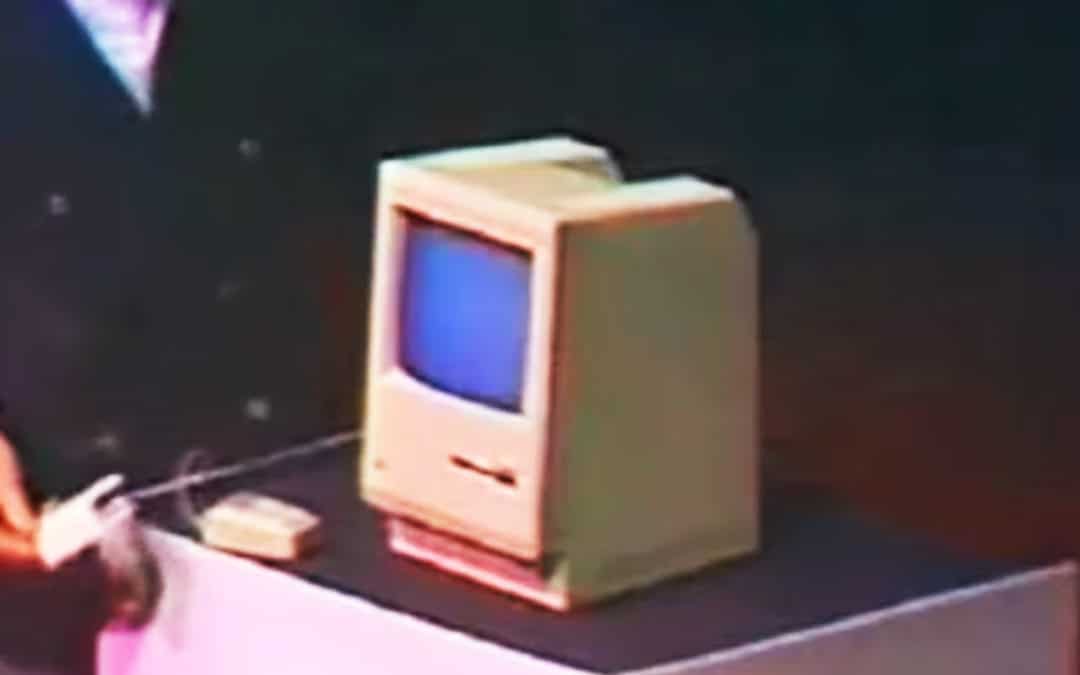
It’s ironic that Evil is working against Apple these days, considering Apple actually gave Evil its start in advertising 26 years ago. Evil proudly stood up and played the part of Big Brother, a surrogate for big bad IBM, in the famous 1984 launch commercial for Macintosh. Apple and Evil were all buddy-buddy in those days, so in a way it’s sad to see Evil turning on its old friend like this. But hey, if there’s one thing you can’t do with Evil, it’s trust.

I’m not normally big on conspiracy theories, but part of me wonders if Google has signed Evil to this deal just to protect itself. After being attacked for invading privacy with Google Buzz and being investigated for monopolistic practices in Europe, Evil was already giving Google that knowing wink. Creating a new partnership to go after Apple might just be the protection Google needs.

I can’t help feeling that Evil is secretly scratching its scaly head over this whole situation, and is probably just “doing it for the money.” After all, the fact that Apple and Android have different philosophies is what gives people true freedom of choice. Slamming Apple for not being like Android is pretty pointless.

Kudos to Evil for reinventing itself, but I’m not sure where it will go from here. There’s always Microsoft, I suppose. But they may be too like-minded for it to work…

Bookmark and Share

27
May 10

Microsoft: reality sinks in

If you’ve been following the adventures of Microsoft and Apple even casually for the last 10 or 20 years, yesterday was a day of almost unimaginable importance.

Apple actually passed Microsoft in terms of market capitalization.

Market cap is more of a theoretical measure, as it’s based on stock prices that vary by the second — but it’s still beyond huge. Apple is now the second most valued corporation, trailing only ExxonMobil.

Despite Apple’s innovations for 20 years, there was always the harsh reality that they were the upstart, not nearly as “important” in the world of technology as Microsoft. This now officially changes.

What a big day for fresh thinking. Quite dramatically, Apple has now proven that innovation pays. In the past ten years, Apple’s market cap has increased ten times — while Microsoft’s has dropped 20%.

Even if you’re just in it for the money, which some technology companies seem to be, Apple’s business model is infinitely more compelling. With a brand that allows them to collect a premium on their products, Apple makes more money by selling fewer products.

If Microsoft feels a little stung by this development, imagine how Dell must feel — now dwarfed by an Apple valued more than ten times as much.

It’s kind of amusing that Apple’s overtaking of Microsoft happened on a day when the AAPL stock price actually dropped. It’s just that Microsoft’s stock price dropped even more. This is like winning the pennant at the end of a long season because the other team lost. But it is a big win, and it’s the result of all that hard work over such a long stretch.

Microsoft just seems terribly lost these days. It’s almost enough to make you feel sorry for them. But not quite.

While Apple vs. Google fight it out in mobile, Microsoft doesn’t even have a first-row seat. Windows Phone 7 is forever coming soon. Zune is Zune. And last week, the top two guys in Microsoft’s Entertainment & Devices division “retired,” resulting in more involvement from … Ballmer.

This is the same Ballmer who one day after his company fell behind Apple in market cap, says that Microsoft is “executing well.” He hides behind Microsoft’s profitability — which remains obscenely high — but I can’t imagine he can hide there too long.

Given Ballmer’s performance these ten years, the torch-wielding villagers can’t be too far behind.

Bookmark and Share

24
May 10

Emergency! Apple adds a few web pages

Forget the BP oil spill. Never mind the European financial crisis. Apple has put up a few web pages.

You’d think by now it would cease to be surprising when grown adults overreact to this stuff. But I’m honestly amazed how many sites reported last week that Apple has started a new Mac campaign with the theme Why you’ll love a Mac — replacing its much-loved (and now much-expired) Get a Mac campaign.

Good lord. Relax.

Why you’ll love a Mac is not a campaign. It’s a series of web pages very much like those Apple has used for years to present the benefits of both Mac and Mac OS X.

Looks to me like the contracts for Justin Long and John Hodgman have simply lapsed and Apple has removed the spots from their site accordingly. Why you’ll love a Mac now tells the feature overview story.

Who knows what the new campaign will be, or if Apple even believes a Mac campaign is required at the moment. But I’ll go way out on a limb and predict that whenever a new campaign begins, it will not be a list of benefits with the theme line Why you’ll love a Mac.

Go about your business, citizens. Remain calm. Help is on its way.

Bookmark and Share

19
May 10

Adobe’s theater of the absurd

Companies do show their character when they enter into combat as Adobe and Apple have done. In theory, high-stakes pressure brings out the best in both sides.

Just a theory, mind you.

Apple gave us a straightforward open letter. Adobe rants about defending freedom, trots out the founders and even summons the ghost of Flash past.

On their truth about Flash page, Adobe “sets the record straight” and “clears up the misconceptions” — starting with this:

Touch. The Adobe Flash Player runtime was actually originally created as a technology for tablets with touch interfaces, and today, it has support for working on touch-based devices.

Wow. Shocker. Didn’t know that. Eager to learn more about Flash’s touch-DNA, I clicked read more, which whisked me to the personal, non-Adobe blog of Flash product manager Mike Chambers. Mike addresses the Top Flash Misconceptions, his first being that Flash doesn’t work on touch screens. “Ironic,” he says, because “Flash was originally created specifically for tablets with touch inputs.”

Yes. So I’ve heard. But again, there’s no further info, so I click yet another link to go deeper. Now I’m at Adobe’s official The History of Flash. However, I’m dumped in the middle of a story that obviously started elsewhere, where the writer speaks in first person but is never identified. Summoning my formidable detective skills, I check the address bar and see the name John Gay, a pioneer of Flash.

He’s talking about his work in pen computing, which had its origins in 1993, and how Macromedia’s Flash still contained much of the code that was written for pen computers. Okay. Thanks for sharing.

It’s interesting that Adobe opens its argument with the flourish that Flash was originally created for touch-based tablets — when the connection is so tenuous and so totally irrelevant to the issues today. Compare this again to the way Apple has presented its argument against Flash. Crisp and to the point.

After following these convoluted links, I’m actually more amazed with Flash than I was before. I was under the impression this technology had only been failing with touch devices for about three years. Turns out it’s more like 17.

Bookmark and Share

17
May 10

Adobe: fighting logic with advertising

Aha. So the fight over Flash has turned into this: Apple’s CEO vs. Adobe’s ad agency.

On one side, Steve Jobs lays out his facts in an open letter. On the other, Adobe’s agency plays with design and poetic meter.

Apple states its case for the cost of a few electrons. Adobe spends a king’s ransom on full-page ads in major newspapers.

Sorry, this isn’t debate — it’s just an ad campaign. Even worse, it’s a campaign in which Adobe wraps itself in the flag of freedom, and casts itself as the champion of three million developers. (Three million developers who just happen to keep Adobe’s cash flow flowing.)

I’m sure Adobe would love to turn this into a debate about freedom — anything other than a debate about the merits of Flash. Problem is, freedom is not the issue. Creating the best user experience on iPhone is. And Adobe has failed to rise to that occasion for three years.

Both sides in this debate rely on proprietary technology. Steve Jobs, in his open letter, says Flash is proprietary, but adds, “Apple has many proprietary products too.” He goes on to explain that Apple can’t allow its mobile app development to depend on other companies which may or may not keep pace with iPhone’s capabilities. Since Adobe has failed to deliver a functional Flash for any mobile platform even today, that’s a valid concern.

Apple is 100% guilty of being controlling, and bless their little hearts for it.

“Create-once/deploy-everwhere” apps may have some appeal for developers, but homogenization is not a user advantage. Apple is doing what they’ve done forever — trying to create the best user experience. In doing so, they’re actually the only company who does provide choice.

Apple’s walled (and well manicured) garden of mobile devices is the choice beyond BlackBerrys, Droids, Nexus Ones and what-have-you. It offers that choice to users and developers. Apple’s ever-growing number of customers don’t seem to mind the exclusion of Flash, nor do its ever-growing number of happy shareholders.

When iPhones, iPods and iPads begin to falter, Apple might have reason to re-think their strategy. But even then that would require an Adobe capable of making Flash work right. At this point, all Apple can see are rising sales and an Internet that’s showing signs of moving away from Flash.

True, they also see a bunch of whiny ads from Adobe. But somehow I doubt they’re about to join the movement.

Bookmark and Share

13
May 10

Microsoft: creating an alternate reality

I suppose it makes sense. If your current reality seems sufficiently gloomy, why not just create a new one?

Microsoft did.

With Windows Phone 7 delayed till next year, competitors leaving them in the dust, and no one exactly clamoring for Microsoft to save the day — they decided to invent their own market.

Not only did Microsoft imagine their own group of hungry consumers, they invented a phone to sell to them. Two phones, actually. These are the new Kin One and Kin Two that I blogged about a while back — phones designed especially for the “social generation.”

Now comes a study that takes a long, detailed look at the social habits of teens. Its message to Microsoft: better get cracking on Kin Three.

Two of the survey’s key findings don’t bode well for a Kin landslide. Or even a Kin trickle, for that matter. Text messaging, at 72%, is by far the #1 way for teens to connect. It is also the #1 missing feature on both Kins.

46% play games, which are also nonexistent on the Kins. No apps either. What Kin offers is a camera and connections to three social networking sites chosen by Microsoft. Even then, it only connects to the Internet every 15 minutes.

In my own survey of random respondents in this dimension, I find that people might be interested in a less-featured smartphone if it were priced way below the others. However, indications are that the Kins will sell for near the price of a $99 iPhone and require a normal data plan.

So the social generation will likely have to choose between a phone that truly does what they do (and is infinitely expandable with apps), and a Kin that does little of what they do. How agonizing a decision that will be.

In an alternate universe somewhere, I’m sure they’ll be lining up around the block to buy a Kin. Microsoft should take solace in that — and leave this reality to those who know how to innovate.

Bookmark and Share

10
May 10

Thinking about AT&T’s rethinking

AT&T, the one sour note in iPhone’s symphony, has been running a new brand campaign called Rethink Possible for about month now (via agency BBDO). Of course, this is much bigger than AT&T Mobile. This is about AT&T revamping their overall image across the spectrum of things they do: mobile, phone, Internet and TV.

When I look at marketing from companies like AT&T, I have two questions. Is it creative? And will it do them any good?

My cheery weekend spirit requires me to start with the positive: Damn, I love this campaign launch commercial. We see dozens of new animation techniques every year, but this one is so beautifully simple and mesmerizing, I never get tired of it — which is fortunate, because I seem to see it everywhere.

I’ve honestly never liked the Pure Imagination song from Willie Wonka, as I’ve seen it used before and it’s always felt corny and lame. Here it feels like genius. Layering such an innocent song over this combination of live action and animation works really well. And then the one line of copy at the end of the spot is near perfect. (I can only say “near” because I was trained long ago that perfection, like the speed of light, is unattainable.)

Go to the AT&T Rethink Possible website and you’re greeted by animated text, again well written. There you can view the other commercials in this campaign, which, especially when viewed in sequence, start feeling like typical, slick, big-agency BBDO-style commercials. Unlike the launch spot, the humanity in these spots is more expected and sappier.

Happily, with this campaign AT&T seems to be putting the bad memory of Luke Wilson and all that juvenile back-and-forth with Verizon out to pasture. Kudos for that.

It’s when you start thinking about the reality of AT&T’s situation that things get significantly less happy. What about this strategy? How believable is it to cast AT&T as the company that can really “rethink possible”?

AT&T certainly has the right to revamp its image. You can’t expect them to tie themselves to a post and accept 40 lashes. (Well, maybe it wouldn’t hurt to ask.) But I don’t imagine a lot of viewers will be leaping from their chairs eager to follow AT&T down the golden path. The company is held responsible for a a great many telco evils, iPhone’s network performance being only one.

If AT&T sees itself as the innovation leader, most will see that for what it is: pure imagination. Having read their entire site, I don’t see a single thing I’m not already getting from Verizon.

Basically, AT&T is a monolith doing what monoliths do. They’re trying to convince us they’re innovative by telling us they’re innovative — when they should instead be demonstrating it with fresh ideas and products.

This campaign changes nothing. Rethink possible is a great employee motivation campaign and T-shirt. To the outside world, it’s just a lot of fluff. But I have to admit — in the launch commercial, it’s truly first-class fluff.

Bookmark and Share

06
May 10

The price of Apple’s fame

When I went to work on Apple’s advertising long ago, I was surprised how every little thing we did was so overanalyzed by journalists and critics.

When I went to work on Intel’s advertising many years later, I was surprised how few people gave a damn what we did.

Well, that’s the way notoriety works. Apple is exciting, Intel is… Intel. People don’t exactly hang on its every ad.

Apple benefits tremendously from this. But it also pays a price — because everyone’s an expert out there, and the Internet rewards writers for covering controversial topics. Or making up the controversies themselves.

Case in point: tonight I was reading this article in the New York Times by Nick Bilton, titled Has Apple Lost Its Cool? Okay, you sucked me in with that one. But then I get to the reasons why Apple is “under fire,” including this one: Steven P. Jobs has been criticized for his terse responses to customers who ask questions about Apple products.

Geez. Shame on Steve for talking to his customers. Last I checked, people were kind of stunned and amazed that he actually takes the time to answer customer emails. He’s been informative, even compassionate. The real reporters over at the New York Times even wrote an article about it just a few weeks ago. Worse still, when you click the terse response link, it takes you to a blog where the poster and all the commenters are discussing the content of one of Steve’s emails—but not one of them is complaining about it.

Shoddy.

Bookmark and Share

03
May 10

iPad killers take a time-out

One day, they may get around to it

I need to un-think something I thought few months ago. Shortly after CES, I expressed the opinion that iPad wouldn’t be able to muscle its way in as easily as iPhone did.

That only seemed logical. At iPhone’s launch, its features were a surprise to everyone. It took Apple’s competitors a good year or two to even begin catching up. When iPad launched, its features were a surprise to almost no one. Surely the combatants would never allow themselves to get hoodwinked so easily again.

There would be no head start for Apple this time around. HP was working on Slate, running a form of Windows. Microsoft was working on Courier, with its cool “journal” motif. Video teasers abounded. Everyone and his mother showed off a tablet at CES.

Now iPad is a few months old, Apple has already shipped its millionth device, and the other devices are… mysteriously missing in action. Astonishingly, the competition is sliding backward instead of moving forward.

In one week, we learned that both HP and Microsoft are bailing on their respective tablets. HP is no doubt re-tooling to make Palm’s WebOS the foundation for their mobile products. That should help them (one day), though it does send them back to square one. Not sure what Microsoft’s plan is, and I’ve given up trying to understand them.

Is it my imagination, or did Apple just get a free pass to run away with it for the first year? Well, not exactly. The Google tablet is still warming up in the wings. At least they have the Android OS, which is a good sign. But so far, all we’ve seen from Google is the same kind of concept and teaser videos we were treated to by HP and Microsoft. And that’s a bad sign.

Looking back, I guess I gave the competition too much credit. It was a silly thing to do, and I promise it won’t happen again.

Bookmark and Share

28
Apr 10

Ode to the floppy disk

The Observatory’s flag is at half-mast today.

Our old friend, the floppy disk, has just received some highly upsetting news. On March 11, 2011, Sony will be pulling the plug once and for all.

It’s a sad ending for the little plasticky thing we once put on such a high pedestal.

The floppy was always on standby. It rode in our shirt pockets, adding nary an ounce. It had a playful sense of humor, hiding in places we could never find.

It packed twice as much into its muscular body as those flimsy 5.25-inch floppies ever did.

Yet still, there was always this undercurrent of disrespect.

We’d call it floppy, even though it wasn’t. We’d write on it. Messily. Then trash it because it didn’t look so good.

After years of companionship, we left it for that “other disk.” The Zip was a momentary pleasure, yet it blinded us.

Floppies were fruitful, multiplying like rabbits. They’d pay us back at the rate of $5/shoebox at garage sales and flea markets. Then one day, even the Salvation Army wouldn’t take them.

Farewell, dear friend. You deserved better than this. May you find the happiness on eBay that you were denied in that ratty case I kept next to my computer.

Bookmark and Share